When I was 25, I was offered a job at a renewable energy startup.
Now, here's something you should know about me.
I went to art school. I have a degree in graphic design. I've been drawing, painting, and making things for as long as I can remember.
And suddenly, I found myself sitting in meetings talking about solar panels, battery storage, electrical infrastructure, and investment strategies.
What the hell was I doing there?
I joined as employee #2, and over the next eight years, I helped grow that startup into a company with around 35 employees and, eventually, four different business entities. I started as Director of Marketing and later became VP.
Meanwhile, I was ALSO running this own brand and design studio.
For a long time, I treated these as two completely different lives.
There was Corporate Katie, who sat in executive meetings and talked about multimillion-dollar energy projects.
And then there was Designer Katie, who spent her evenings making badass beer cans, beautiful brands, websites, and colorful illustrations.
I felt like I was constantly switching between two completely different worlds.
Turns out, deep down I was connecting them.
And some of the most valuable lessons I've learned about creativity, marketing, branding, and building a business came from spending eight years in an industry that seemingly had nothing to do with graphic design.
Here are four lessons that completely changed how I approach my work today.
01. Build Your Business Like a Microgrid.
Okay, I'm about to nerd out on you for a second.
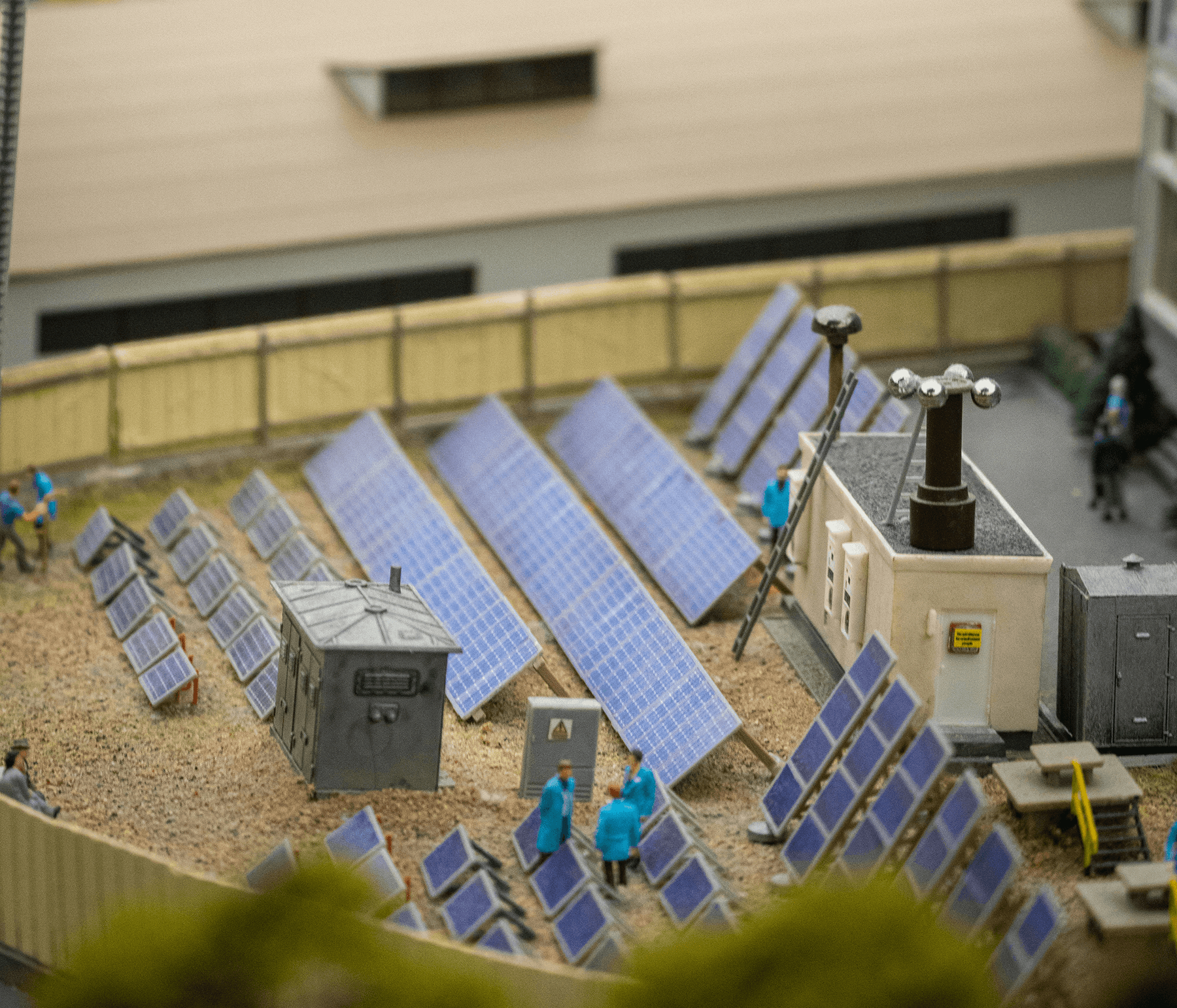
One of the coolest things we worked on in renewable energy was microgrids.
Essentially, a microgrid is a localized energy system that can combine multiple energy sources, like solar, natural gas, and battery storage, to power a facility or community.
The magic is in how those resources work together.
When the sun isn't shining, stored energy or another source can pick up the slack.
When the larger electrical grid goes down, a properly designed microgrid can keep critical operations running.
It's all about resilience.
And one day, I realized that this is EXACTLY how we should be thinking about our businesses.
If your entire marketing strategy depends on Instagram, what happens when the algorithm changes?
If 90% of your revenue comes from one client, what happens when they leave?
If your entire brand is built around one product, what happens when you're ready to expand?
You need systems that support each other.
Multiple ways to reach your audience. Different sources of revenue. A brand identity that can grow and evolve alongside your business.
You don't necessarily need to do EVERYTHING. You just need to be intentional about where you're creating vulnerabilities.
Build your own little microgrid.
Make your business resilient enough to weather the unexpected.
02. Stop Playing Checkers. Start Playing Chess.
Working in a startup taught me to think further ahead.
When you're building a company, decisions don't exist in isolation.
The move you make today can open doors or create massive headaches three years from now.
And the same is true for branding.
Let's say you're launching a beverage company.
Right now, you have one flavor. One can. One product.
Easy enough, right?
But what happens when that one flavor becomes six?
What happens when you introduce a higher-potency line, different can sizes, or an entirely new category of products?
Suddenly, that cute little logo and one-off label design need to function as an entire brand ecosystem.
If you didn't plan for that growth, you're basically starting over.
This is why I approach brand strategy and packaging design the way I do.
I'm not just thinking about what your business needs today. I'm thinking about what future-you is going to need, too.
That means creating flexible visual identities, scalable packaging systems, and thoughtful brand foundations that can evolve as a business grows.
And this applies to SO much more than design.
The clients you take on. The systems you build. The prices you set. The people you partner with.
Every decision is setting up your next move.
So before you make one, ask yourself:
Am I solving a problem for today, or am I building something that will still serve me tomorrow?
Play chess, my friends.
03. Nobody Cares How Smart You Sound if They Don't Understand You.
This one was a BIG lesson.
I spent years sitting in rooms full of engineers, executives, investors, and people who had decades more experience than I did.
And I had to learn how to communicate with ALL of them.
Here's the thing about working with highly technical people.
They know their shit.
But sometimes, when you're so deep in your own expertise, you forget that the rest of the world doesn't speak your language.
I saw this constantly in renewable energy.
Incredibly sophisticated technologies with enormous potential, explained in ways that would make the average person's eyes glaze over in seconds.
My job was to take those complicated ideas and translate them into something people could actually understand and get excited about.
And guess what?
That's literally what good marketing does.
Your customers don't need to understand every technical detail of how your product works.
They need to understand why it matters to THEM.
You could have the most innovative product on the market, but if you can't communicate its value, you're going to have a hell of a time selling it.
And the same applies to branding and creative work.
A beautiful design means very little if it doesn't communicate the right message to the right audience.
Whether you're explaining a complicated technology, launching a new consumer product, or building a brand from scratch, the goal is the same: make people understand why they should care.
Clarity isn't about dumbing things down.
It's about making complex ideas accessible without losing what makes them valuable.
That's a skill worth developing, no matter what industry you're in.
04. Your Weird Collection of Skills Might Just Be Your Superpower.
Here's where all of this comes together.
For years, I felt like I had to compartmentalize who I was.
I was a designer. But I was also a marketer. And a business strategist. And an artist. And somehow, a person who knew an oddly specific amount about distributed energy infrastructure and battery energy storage systems.
What a weird combination.
But the longer I worked across these different worlds, the more I started noticing connections.
The way an energy system is designed isn't all that different from the way a business is structured.
The way an engineer solves a complex problem isn't all that different from how a designer approaches a creative challenge.
The way you communicate a technical product to investors isn't all that different from how you communicate a brand's value to customers.
Different industries. Different applications.
A whole lot of the same underlying principles.
And I realized that my experience outside of design wasn't pulling me away from my creative career.
It was making me better at it.
I wasn't just learning how to make things look good.
I was learning how to understand the foundational needs of a successful and sustainable business.
And that's become one of the most valuable parts of what I bring to the table today.
When I work with a brand, I'm not just looking at typography, color palettes, and packaging layouts.
I'm thinking about positioning, communication, growth, operational realities, and how all of those pieces work together to build something successful.
Because great design doesn't exist in a vacuum.
It exists to support something bigger.
The Biggest Lesson? Connect the Dots
I spent years thinking I was living two different professional lives.
Now I realize I was building one really interesting skill set.
And I think a lot of us underestimate how much value exists in the seemingly unrelated things we've learned along the way.
Maybe you worked in hospitality before launching your business, and now you're incredible at understanding customer experience.
Maybe you studied psychology before becoming a marketer, and now you understand human behavior on a completely different level.
Maybe your weird hobby has taught you something about problem-solving that your competitors haven't even considered.
Those experiences aren't irrelevant. They're ingredients.
And the more you learn to connect them, the more interesting your perspective becomes.
So here's my challenge:
Stop looking at your experiences as a collection of unrelated chapters.
Start looking for the connections.
Because sometimes, the thing that makes you exceptional at what you do has absolutely nothing to do with what you do.
And that's pretty fucking cool.
Building a Brand? Let's Connect the Dots
Today, I bring that same cross-industry perspective to my work as a brand strategist and packaging designer, helping businesses turn big ideas into bold, thoughtful, and scalable brand experiences.
Whether you're launching something new, expanding your product line, or rethinking your brand's direction, I believe the best creative work starts with understanding the bigger picture.
Have something bold in the works? Let's work together.